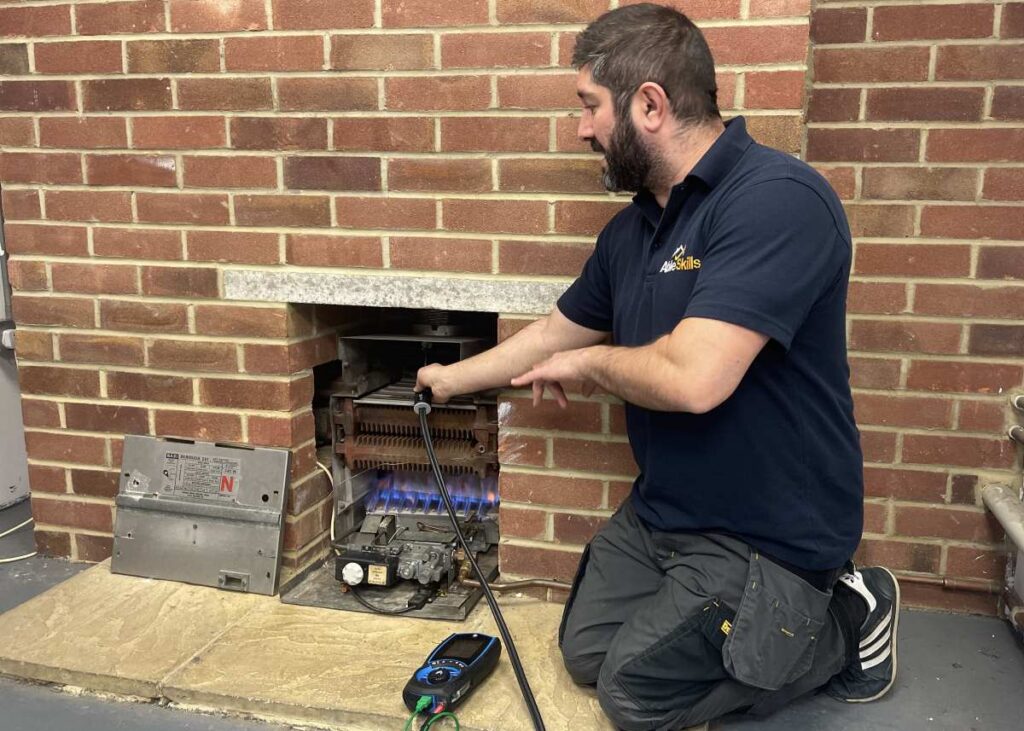
Holding an ACS is the industry-recognised certificate of competence in gas engineering. It’s also an essential prerequisite of Gas Safe Registration, which is a legal requirement in the UK before you can do any work on gas appliances and gas installations. So, who needs ACS gas training, how do you get it, and why is it important?
This guide to ACS training will take you through all the important information. From initial ACS gas training and assessment through to ACS reassessment, we’ll look at who needs ACS gas qualifications, why it’s important to hold a current ACS certification and what ACS modules you might need.
What is ACS gas training and why is it essential for gas engineers?
ACS (Accredited Certification Scheme) Core Domestic Natural Gas Safety and Appliances is the industry-accepted route to gain a certificate that demonstrates competence within the industry of gas engineering. It’s a set of assessments, rather than gas training. You receive a certificate for each module that is successfully undertaken.
UKAS (United Kingdom Accreditation Service) oversee the scheme, and it covers all areas of gas work, including domestic natural gas, commercial heating, commercial catering, emergency service provision, LPG, and gas meter installation.
Trainees gas engineers require an initial ACS assessment when they reach the end of the gas training. Working gas engineers require subsequent ACS reassessment to maintain certification.
ACS gas training is essential for gas engineers because ACS is one of the qualification requirements for joining the Gas Safe Register and holding a Gas Safe Registration.
What are the ACS training requirements for Gas Safe engineers?
In reference to becoming Gas Safe Registered, the ACS’s main function demonstrates that the applicant has been assessed on their working practices against a standardised set of national criteria.
In the UK, Gas Safe Registration is needed before anyone can work legally on any installation, maintenance and servicing of domestic gas appliances and pipe-work installations.
This ACS qualification is required prior to Gas Safe Registration. The ACS reassessment is required to maintain eligibility for Gas Safe Registration.
Is ACS gas training or is it an assessment?
ACS is an assessment scheme rather than a training course. You’ll be expected to have completed a programme of learning and work placement before booking. This will ensure that you have the practical training and theoretical knowledge in order to take the assessments, which is usually an observed ACS practical assessment, short-answer questions and multiple-choice tests.
What ACS modules do gas engineers need?
What ACS modules that a gas engineer will need to do will depend on whether they intend to work in domestic, commercial or catering. Each route will start with the core gas safety assessment, before adding modules for specific appliances or specialist areas.
Example ACS assessment for a domestic gas engineer:
They’ll start with their core domestic gas safety assessment (CCN 1/CPA1). Then they’ll choose the relevant appliance-specific assessments, such as central heating boilers (CENWAT 1), meters (MET 1), gas fires (HTR1) and cookers (CKR1).
This would mean that the gas engineer would hold the relevant ACS modules to work on a wide range of domestic gas installations and appliances in people’s homes.
Put simply, if you don’t hold an ACS for the appliance module, you can’t work on that appliance. Often, the core gas training is paired with the central heating and water heaters in an initial ACS assessment package. Adding meters, fires and cookers means the engineer can work on more appliances.
What is included in CCN1 training?
CCN1 is the core domestic gas safety. It’s assessment rather than learning, as it certifies the knowledge and practical experience an individual has gained on gas training and through work placement.
The purpose of the ACS is to provide the knowledge and skills in safety regulations, procedures, and British Standards applicable to gas installations.
Initial assessment for CCN1 (domestic core gas safety) covers:
- Gas Safety Regulations, British Standards and Manufacturers' Instructions
- Emergency Procedures, Labels and Warning Notices
- Unsafe Situations and Related Documentation
- Combustion, Gas Rates, Burner/Installation Pressures
- Testing for Tightness, Purging and Relighting Appliances
- Pipework and Fittings
- Operation of Appliance Gas Safety Devices and Controls
- Ventilation
- Flueing Standards, Installation and Testing
How long does ACS certification last and when does it need renewing?
Each ACS certificate is valid for 5 years and can be renewed in advance by taking an ACS reassessment up to six months early. To be eligible to take an ACS reassessment, you’ll be a Category 1 candidate – an experienced gas engineer who is looking to renew an ACS that is due to expire or has recently expired. You’ll need to hold an ACS with an expiry of less than 12 months.
It’s therefore important to take note of the date of each ACS assessment to ensure that you have adequate time to book, prepare and arrange to retake your ACS for core gas safety and appliances. It’s your responsibility to keep these up to date for continual Gas Safe Registration.
Is there a difference between domestic and commercial ACS qualifications?
Domestic gas ACS, commercial gas ACS and catering gas ACS each have their own core gas safety modules that are required for that work environment.
In the same way that domestic gas has different appliance-specific modules, there are specific appliance, installation and testing modules that an engineer can take to allow them to work on different tasks in commercial gas or catering, in addition to the core commercial gas safety or core commercial catering gas safety.
FAQs about ACS Gas Training
What ACS gas training do I need for Gas Safe Registration?
You’ll need to hold a current ACS in core gas safety and an ACS certificate for any area of work that you want to be Gas Safe Registered for.
How do I get my ACS gas qualifications?
You can get your ACS gas qualification through an approved training centre that is eligible to deliver the ACS gas training and assessments. The initial ACS assessment takes up to 5 days, during which time you’ll be assessed on theory and practical skills.
How do I prepare for my ACS assessment?
It’s usual that you’ll do the ACS initial assessment once you’ve done a suitable gas engineer training programme (a Managed Learning Programme (MLP) and a work placement portfolio. This training will give you the foundations, and it’s useful to review theory and regulations before the assessment.
Where can I complete my ACS gas training?
You can complete ACS initial assessments or ACS reassessments at one of the accredited ACS training providers, including Able Skills in Dartford, Kent. These assessment centres are approved by the relevant certification bodies, such as BPEC or LCL Awards.
What happens if I fail my ACS assessment?
It’s challenging by nature, but an adequate five days is allocated for the ACS assessment. In the event of failure or running out of time, you can book the ACS again to do a resit.
How often do I need to retake my ACS gas training?
As gas ACS certificates are valid for 5 years, you’ll need to renew them. ACS reassessments can be booked up to six months early to ensure continual certification without losing any time.
How to get started
ACS Gas Training at Able Skills
“This week I finally passed my ACS; a year ago this was all but a dream…Having done my Gas Managed Learning Programme, Gas Portfolio, G3 Unvented Cylinders, Water Regs and my ACS
All I can say is a massive thank you to all the staff and for anyone considering any training in a trade, USE ABLE SKILLS, you won’t regret it” – Matthew via Trustpilot
Able Skills in Dartford, Kent, is an approved assessment centre for the LCL Awards ACS, delivering core gas safety training and assessments, appliances and ACS reassessments.
If you’d like any information, have any questions or would like to check availability for the ACS gas training and assessment or ACS reassessments, contact us today by phone or email.
 Gas Engineer