How to become a tiler: A complete guide to a career in tiling
As with all trades, there are several routes to become a tiler. If you’re considering a career in tiling, this article explains the job of a tiler and the different pathways to the profession.
Is becoming a professional tiler something that has sparked your interest? Find out more about how to become a tiler and take those first steps towards your new career.
Perhaps you’re looking for a more hands-on job, or one that allows you to get in touch with your creative side — there are plenty of reasons why the profession might appeal.
Many tilers also go on to start their own businesses, meaning once you’ve built some experience, you could be in a position to work for yourself, setting your own hours and rates.
Are you considering a new career in tiling?
There are many reasons why you might be considering becoming a tiler. People come to the profession at many ages and different stages of life.
Why do you want to become a tiler?
- Considering tiling as a career change?
- Thinking of setting yourself up as a self-employed tiler?
- Want to learn a trade and tiling is appealing?
- Returning to a trade and want up-to-date industry information abou tiling?
If you’re looking for information about learning tiling for DIY or if you’re a landlord or property developer wanting to gain some tiling skills, find out what you can learn on Able Skills Introduction to Tiling course.
Why tiling is a great career
A career in tiling is a great option for anyone who enjoys working with their hands, has a keen eye for detail and wants a good amount of variety in their day-to-day work.
Tiling is very much a practical career and is best suited to those who prefer their working life to be predominantly physical. With that being said, you’ll require some theory of construction processes.
If you are constantly fed up with doing the same job day in and day out in front of the same computer screen, then maybe a new career in construction is the one for you.
What does a tiler do?
The kind of work tilers are expected to carry out will vary on a daily basis, and will also depend on whether you focus on domestic or commercial work. A few of the most common responsibilities of tilers include:
- Speaking to clients to better understand what they’re looking for
- Repairing and removing old tiles and surfaces
- Preparing surfaces by levelling off with plaster, sand or cement
- Marking out areas to estimate the amount of materials needed to complete jobs
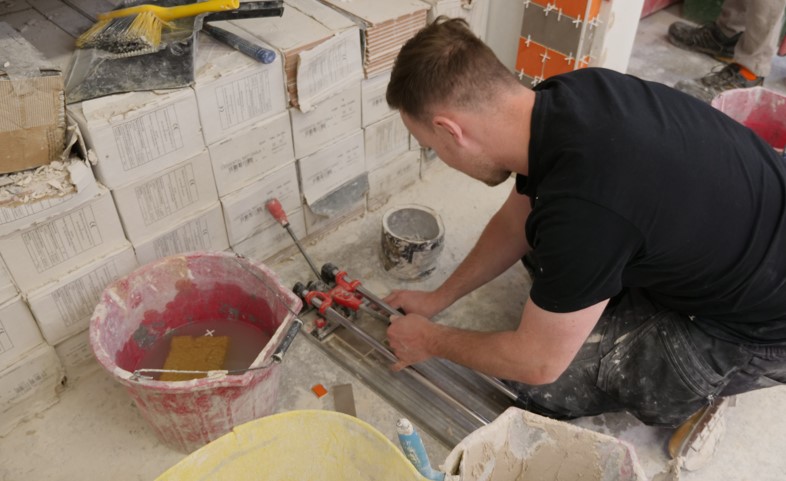
- Cutting tiles to size and shaping with hand-cutters or bench-mounted tools
- Fixing tiles in place and applying adhesives before applying finishes
A typical day as a tiler
The day-to-day routine for tilers will vary depending on whether you work in a domestic or commercial setting.
However, some of the most common tasks you can expect to carry out will likely include: meeting and speaking to potential customers; repairing and removing old tiles and surfaces; prepping work areas; supplying cost and time estimates and, of course, cutting, shaping and mounting tiles.
How much do tilers earn?
According to Indeed’s latest salary data, tilers in the UK can expect to earn an average base salary of £30,255* per year, though that is higher in cities such as London and Leeds.
What progression opportunities are available to tilers?
Career progression paths for tilers could include becoming a site supervisor, estimator or contract manager.
Experienced tilers may also choose to set up their own business, allowing you greater control over your working schedule and rates. There is also the option to pursue a career in teaching, training and assessing.
How to start a career in tiling
What routes are available to become a tiler?
There are four main routes to becoming a tiler:
- A college course
- Apprenticeship
- Working as a site labourer (or as a tiler’s mate)
- Learning through a tiling course at a private training provider like Able Skills.
What qualifications does a tiler need?
While it is not a legal requirement to hold a formal qualification to begin tiling work in a domestic setting, completing a City & Guilds certificate or NVQ can help assure potential customers that you have trained to a high standard.
For tilers who expect to be working on a construction site, many require you to hold a valid CSCS card. This article explains why you’d need to get an NVQ Level 2 before applying for a Blue Skilled Worker CSCS card and what training you might need to prepare you for the NVQ.
How long does it take to complete a tiling qualification?
The length of time it will take to become a qualified tiler will depend on your prior experience and the level you wish to train to. For complete beginners in the industry who want to achieve their NVQ Level 2, the initial training to prepare you for that will take roughly seven weeks.
How to find work as a tiler
Use the time you spend training to begin building a network of useful contacts — you never know who you’ll meet during this period and if that could lead to work at some point down the line.
While it may sound simple, regularly updating your CV, portfolio and social media accounts can make a big difference when job hunting. Being proactive can also help, even if a company isn’t advertising roles, reach out and contact them anyway, they just might not have gotten around to recruiting.
If you’re going down the self-employed route, then investing in a good website is always beneficial when it comes to finding work. It doesn’t need to be anything fancy, but it should be quick and easy for people to find and contact you.
Discovery sites like Checkatrade and Rated People can be equally as valuable when it comes to finding work, so be sure to keep your profile relevant and up-to-date.
More traditional methods, such as a branded vehicle, flyers and notice boards are still all handy too, as is good old word-of-mouth, though remember the latter does rely on delivering consistently high-quality work.
Becoming a self-employed tiler
If you’re considering starting a new career as a tiler, working self-employed could be a very appealing option. It allows you to set your owns hours, rates, and puts you in control of your schedule. It also means you’re responsible for finding and securing work, and that means promoting your services, building connections in the industry, and keeping customers happy with good quality work.
Venturing into the unknown and starting a new career on your own can be a daunting prospect, but it could be life-changing, and you might never look back.
FAQs
Can I fit a tiling course around my current job?
When planning a career change, the time commitment that comes with training in a new profession can be a big hurdle. However, the construction industry is now more accessible than ever, with many construction training providers offering tiling courses on a part-time, weekend basis.
What qualifications do I need to work as a tiler?
Industry standard qualifications, such as City & Guilds and NVQ, are worth considering as they are a great way of helping you stand out to potential employers and customers, reinforcing that your skills meet the latest industry standards.
What’s the best way to learn tiling if I want to become a tiler?
That depends on your age and circumstances. For school leavers, learning construction at college or on an apprenticeship is a natural step. For those later in life, evening classes in tiling, doing a part-time or full-time tiling course at a construction training provider or starting work as a labourer or tiler’s mate are ways to learn tiling techniques and access the industry.
Is tiling a worthwhile career?
As with all trades, there is an ongoing demand due to skill shortages and the renewed need for tilers due to building and maintenance. Tiling has scope for employment or self-employment and is a useful additional service for handymen or property maintenance.
Where to start if you’re new to tiling
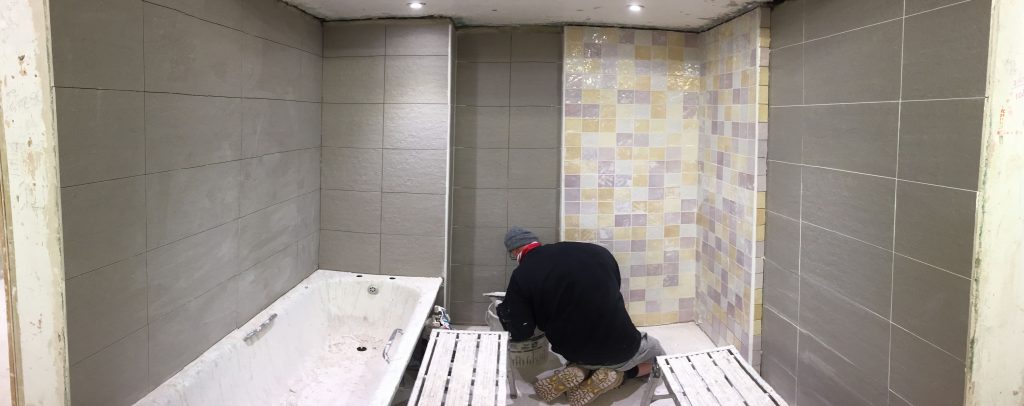
If you’re interested in starting tiling but you’ve never done it before, it’s best to get a taste of the trade first. This might simply be doing a few tiling jobs at home, or for friends or family. A perfect place to start is by doing a beginner's tiling course. This would give you basic tiling skills and allow you to practice in a controlled, supervised environment, such as a construction training centre, so you can make mistakes without worrying about messing up your kitchen splashback.
“I did the wall and floor tiling course because it is a trade I laboured for a couple of times when I was a kid and enjoyed it. Tried multiple other avenues other than trade work as a career, but none worked out, and I decided I was going to commit to a career in the trade.” - Read Jake’s student story.
Able Skills offers a range of expert-led tiling courses for all levels of experience. For those who want a taste of the industry, an introductory course is a great way to learn basic skills and open the door for further training. Weekend tiling training is also available for those looking for a more flexible way to complete their learning.
Drop by the training centre in Dartford anytime we’re open and our team would be happy to help you find the course that’s right for you, or If you can’t make it in, call us on 01322 280 202.
Editor's note: this post was originally published on 7 February 2023 and then updated on 17 March 2026. *Correct at time of publishing.